Allan Kyakonye is a 1991 Ugandan born visual artist with a
Bachelor's Degree in Fine Art and Industrial Design from Makerere University in
2015.
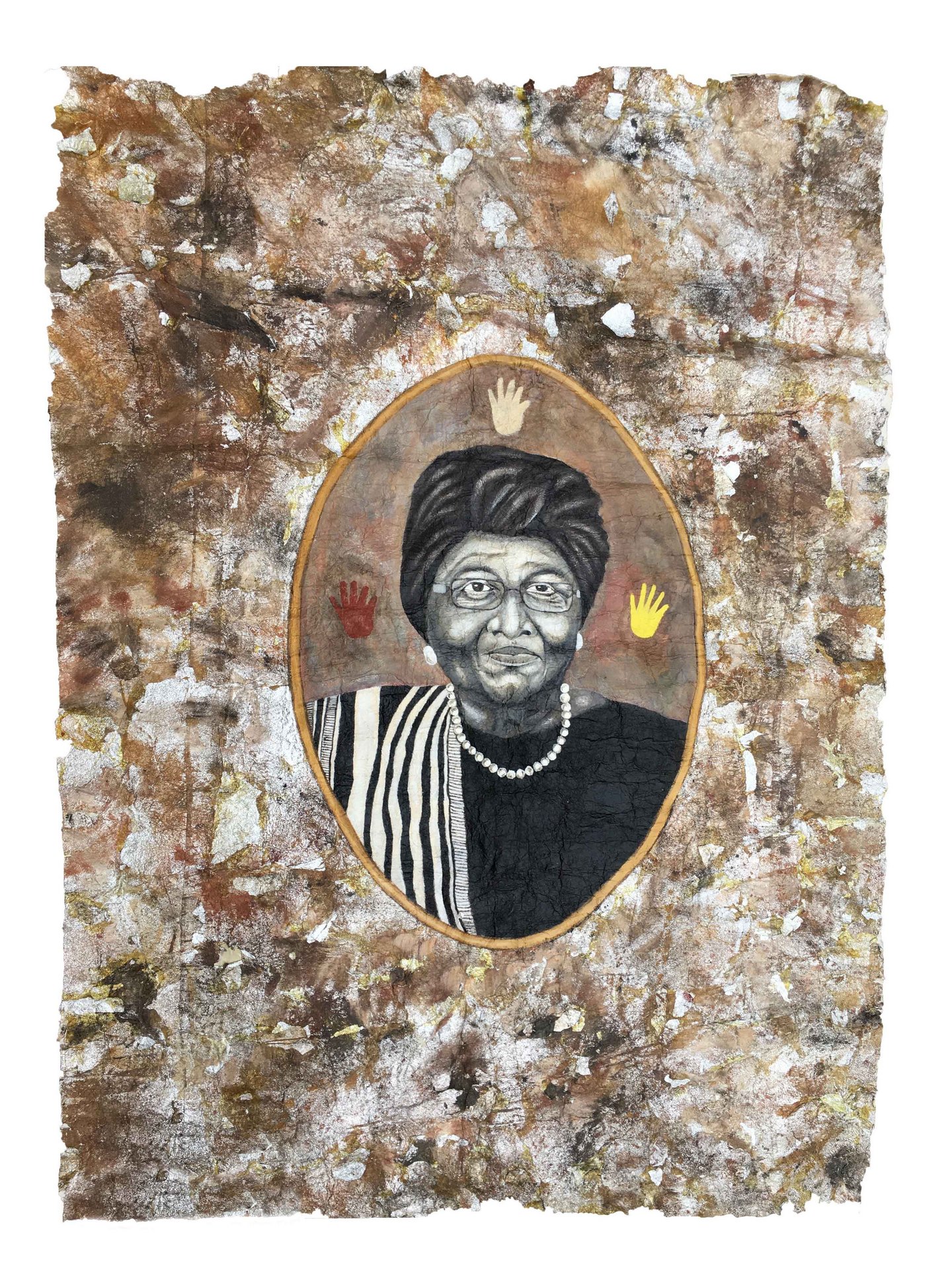
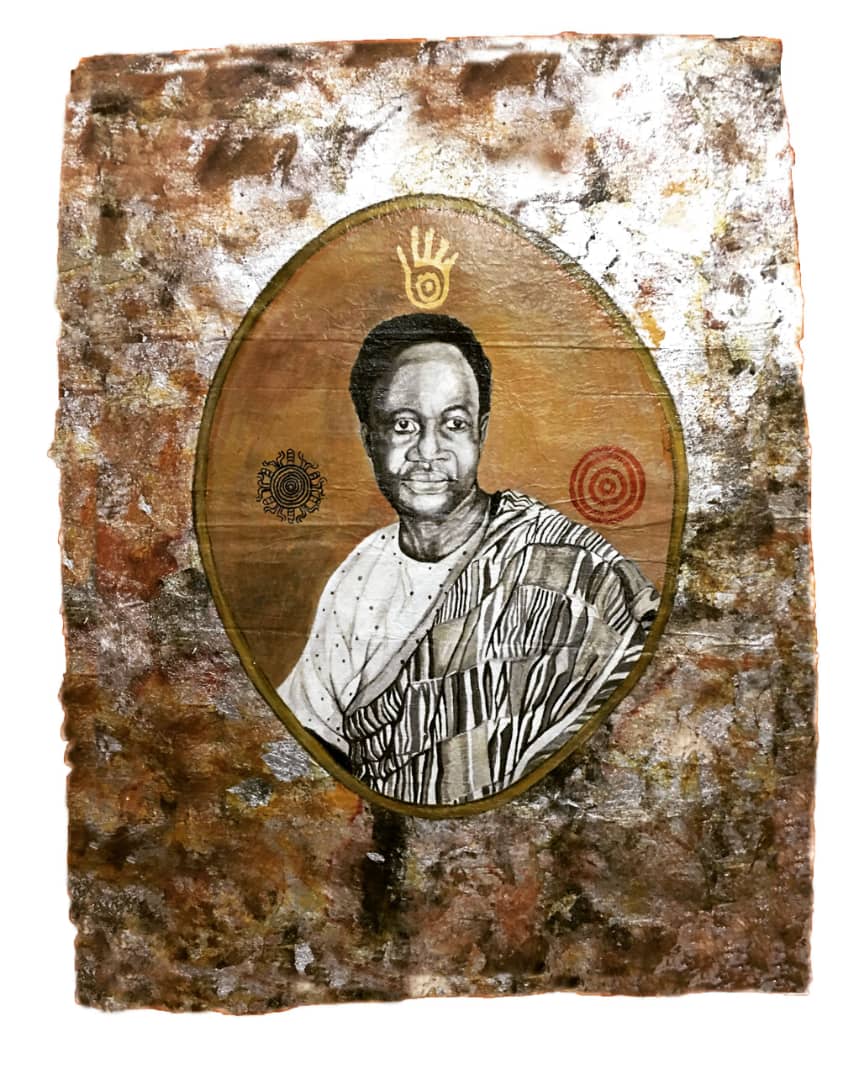
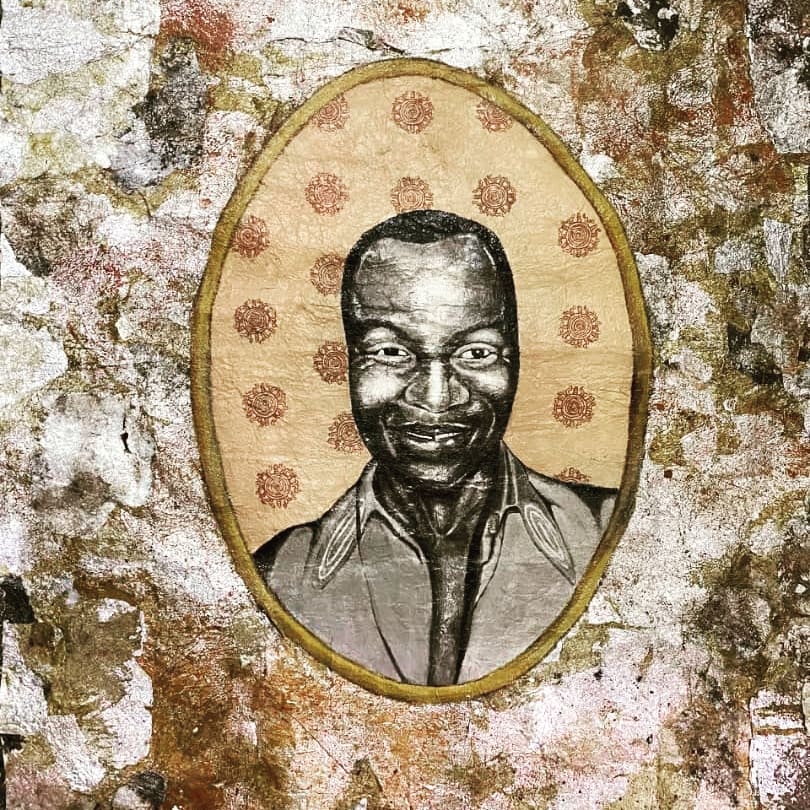
The egg potrait series is one of the projects the artist has
worked on with the works being characterized by their oval shaped primary
framework and use of aluminium foil as canvases on which the works are
executed. The egg being a universal symbol for new beginnings or new life
delivers a backdrop for the personalities Allan depicts using egg tempera of
his own making. The potraits of queens, kings, politicians and other decisive
leaders appear as centerpieces in a medallion which itself signifies power
since renaissance.
He chose to use aluminium foil, a material he collected at
an early age with an aim of selling it to scrap dealers like many other African
kids do but without success later incorporated into his art practice. He fixes
layered pieces of crumpled aluminium foil onto canvases and treats it with fire
causing different shades as seen in his works. The use of fire creates another
allusion to the proverbial meaning of his name Kyakonye. In a subtle move, the
potraits cease to be sorely of historical figures and start creating invisible
bridges across time and space; opening up a multiplicity of pathways
imaginations and storytelling.
Allan used his new residence at 32 Degree East to begin research and compose stetches for his new concept "the first ceaserean." Images from the mid 1800s suggest that ceasereans were being performed in Bunyoro Kingdom atleast 10 years before the first successful ones in the Western world. Some literature suggests that the first ceasereans were performed among the South East Asians and the Middle East. Something that gets Allan to question himself other histories and culture. Under what circumstances were the ceasereans performed? Should we sacrifice the life of the mother for that of a potential King?
He is currently working with potential risk as expression. Sharing his immediate reference as transcending images from albums whose practices express his autobiography as a long time interraction. The introspective in form of collage questions changing opinions instilling values and translating experiences across space and time.